A drain clogs, starts moving slowly again after service, and then backs up a few weeks later. That cycle means the original blockage was never fully removed from the pipe.
Most professional drain clearing comes down to two methods: snaking and hydro jetting. Both restore flow, but they work very differently inside the pipe. Choosing the wrong one can leave grease, sludge, sand, or roots behind, which allows the clog to return.
Deciding between hydro jetting and snaking becomes less about which tool is “better” and more about which one matches the actual condition of the drain line.
What is Drain Snaking?
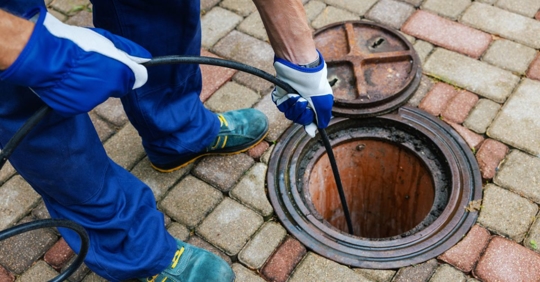
Drain snaking uses a flexible plumbing auger that spins through the pipe and punches through a blockage mechanically. The cable breaks apart clogs enough to reopen the drain and allow water to move again.
Professional drain snaking works well for localized blockages because it restores flow quickly without requiring heavy cleaning equipment. In many homes, that is all the pipe needs.
The limitation is that the snake usually clears a path through the blockage instead of fully cleaning the pipe walls. Grease, sludge, soap residue, and buildup often stay attached inside the line after service.
That difference between snaking and hydro jetting matters most in drains that clog repeatedly.
Best Uses for a Drain Snake
For isolated problems near the fixture, snaking is often the correct first step because it clears the obstruction without overcomplicating the repair.
A drain snake is best suited for clearing:
- Hair clogs in shower drains
- Small toilet paper blockages
- Localized sink backups
- Retrieving dropped items from drains
- Minor obstructions close to the opening
What is Hydro Jetting?
Hydro jetting uses high-pressure water to clean the full interior diameter of the pipe. Instead of drilling a small opening through the clog, the jetting nozzle scours buildup from the pipe walls and flushes debris completely out of the system.
Grease, sludge, sand, mineral buildup, and debris are pushed downstream and removed instead of left behind inside the line.
Professional hydro jetting also works differently around recurring sewer problems because the cleaning reaches the full circumference of the pipe instead of a narrow center path.
Deciding when to hydro jet a sewer line usually depends on the condition of the pipe and how often the backups return.
Best Uses for Hydro Jetting
When snaking leaves residue behind or buildup becomes too severe, hydro jetting provides a complete clean. It is the ideal solution for:
- Dissolving heavy grease buildup in kitchen lines
- Clearing whole-house sewer backups
- Resolving chronic recurring drain clogs
- Flushing large accumulations of sludge or debris
- Cleaning buildup from long horizontal drain runs
The Southwest Florida Factor: Sand, Scale, and Tree Roots
Southwest Florida plumbing systems deal with conditions that change how drains clog over time. Sandy soil, hard water scale, and tree root infiltration all affect underground sewer lines differently than a basic kitchen clog.
Sand entering older drain systems settles along the bottom of the pipe and continues collecting debris as water flows through. Snaking may temporarily reopen the line, but hydro jetting flushes the material fully out of the system.
Tree root infiltration creates another problem in older sewer lines throughout Cape Coral, Fort Myers, Naples, and Port Charlotte. Small roots enter tiny openings in aging pipes and continue expanding as they absorb moisture from inside the sewer line.
A snake may break through part of the obstruction temporarily, but hydro jetting slices through smaller root growth and clears residue from the pipe walls more thoroughly.
Hard water scale creates buildup inside older cast iron pipes across Lee, Collier, and Charlotte counties. As the pipe diameter narrows, grease and debris collect faster inside the rough interior surface.
Can High-Pressure Jetting Damage Older Pipes?
This is one of the most common concerns homeowners have, especially in older homes with aging cast iron pipes.
A professional plumber should never perform hydro jetting or major drain cleaning on a sewer line without understanding the pipe’s condition first. That is why Aztec Plumbing & Drains uses a plumbing camera inspection before recommending large-scale drain cleaning.
The inspection checks for cracks, collapsed sections, separated joints, or structural weaknesses that could make aggressive cleaning unsafe.
Older pipes are not automatically disqualified from hydro jetting. The condition of the line matters far more than the age alone.
How to Choose the Right Solution for Your Home
Minor clogs near a fixture usually respond well to snaking. The blockage gets cleared quickly, flow returns, and the drain continues operating normally.
Recurring backups are different. If grease, sludge, roots, or buildup stay attached to the pipe walls, the clog usually returns because the underlying restriction never left the system.
How clogged drains are cleared around Fort Myers depends on what is inside the line and how long the buildup has been developing.
Snaking works well for small, isolated problems. Hydro jetting is better suited for heavy buildup, recurring sewer backups, and restoring pipe flow more completely.
Aztec Plumbing & Drains uses camera inspections and diagnostic testing to determine which approach fits the condition of the drain instead of applying the same solution to every clog.
Schedule Online(239) 932-2959