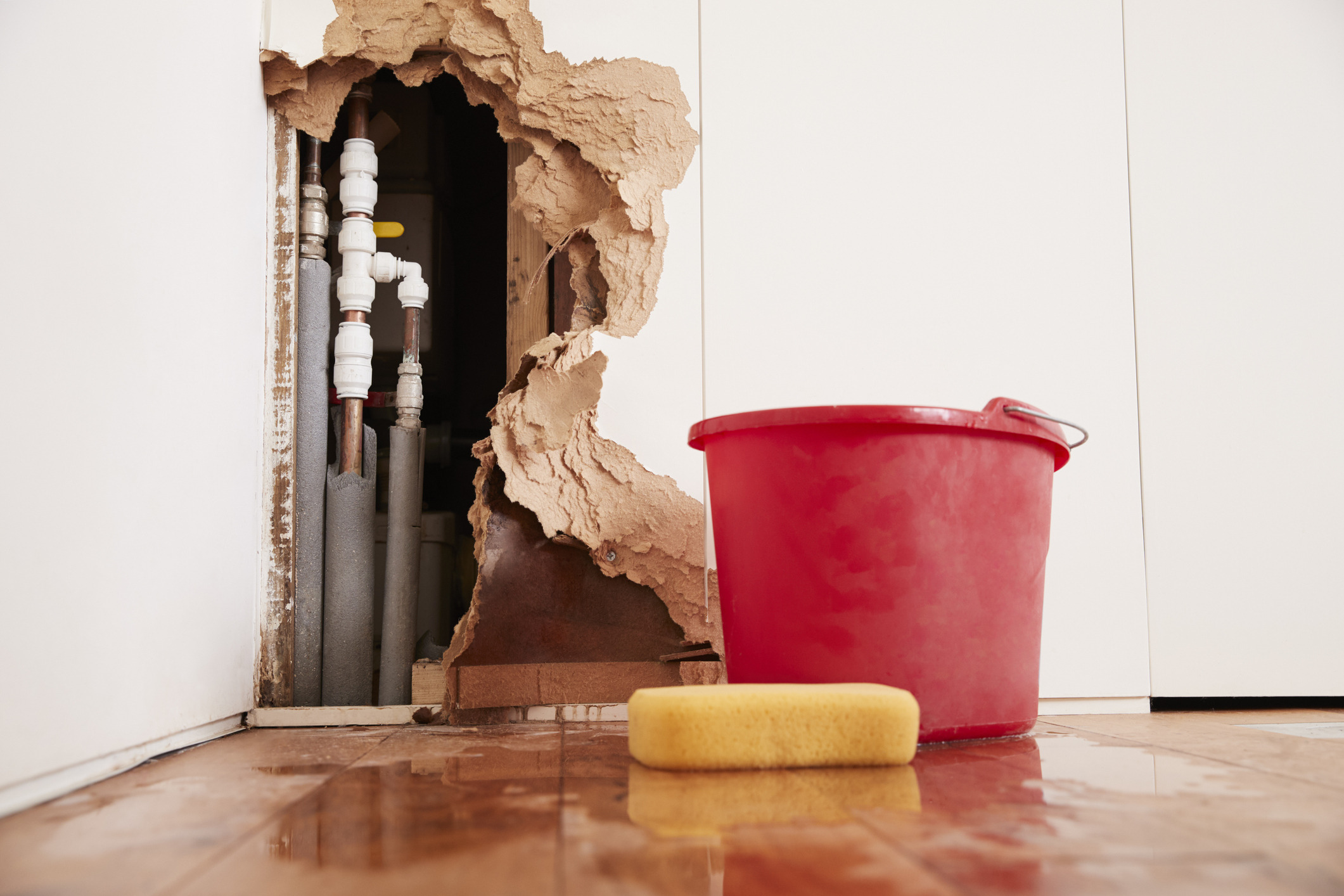
A water heater leak always feels urgent. One moment the garage or utility room looks normal, and the next you notice a thin line of water or a small puddle that wasn’t there earlier. For homeowners in Fort Myers, Cape Coral, Naples, and Port Charlotte, even a small leak can spread quickly because humidity holds moisture inside the home longer.
Additionally, the mineral-heavy water common in our region accelerates internal tank corrosion, meaning leaks can escalate from a drip to a failure much faster than in other climates.
The most important thing is to stay calm and take a few quick steps, so the leak doesn’t grow. If water is actively leaking, Aztec Plumbing & Drains is available 24 hours a day. Call us at (239) 932-2959 for emergency plumbing help.
Immediate Action: 3-Step Emergency Shut-Off Procedure
These steps make the situation safer while you wait for a technician. They also help prevent electrical hazards and water damage.
1. Shut Off the Power
Turning off power keeps the heater from trying to reheat while it is leaking.
For electric heaters:
- Go to your breaker panel.
- Switch off the breaker labeled for the water heater.
For gas heaters:
- Look for the gas control knob on the front of the unit.
- Turn it to the off position.
This protects both you and the equipment.
2. Shut Off the Water
Stopping incoming water slows the leak and limits how far it spreads.
- Find the cold-water shutoff valve above the tank.
- Turn it clockwise until it closes.
If you cannot reach it, the main water shutoff for the house will stop the flow just as well.
3. Contain the Water
Even after both shutoffs, the tank still holds water.
- Place towels or a pan under the leak
- If possible, connect a hose to the drain valve
- Run the hose outside or to a floor drain
- Open a hot water faucet to help the tank release water faster
This helps limit damage while the system drains.
What to Look for: The Subtle and Obvious Signs of a Leak
Leaks show up in different ways. Some are hard to miss. Others look minor at first and gradually become more noticeable.
The Obvious: Water Pooling at the Base
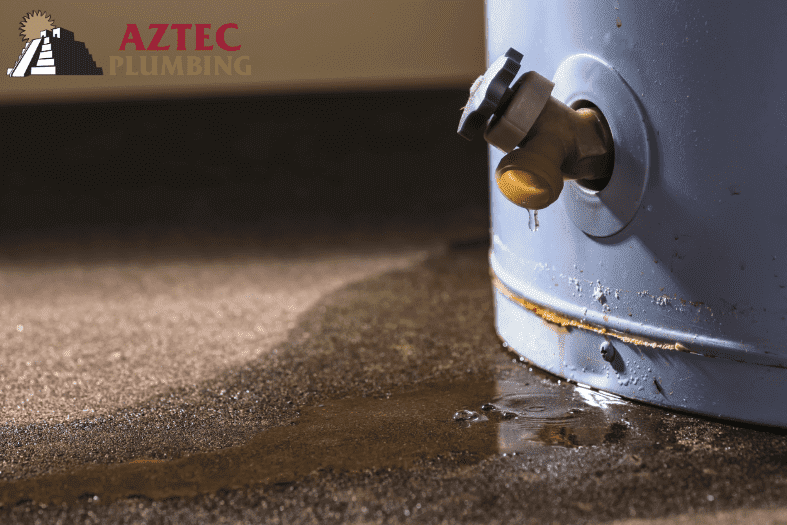
A puddle around the tank usually means a leak is present. It helps to make sure it is not condensation. Condensation pools lightly and tends to dry out. A leak continues to reappear, even after you wipe the water away.
Rusty Water or Corrosion on the Tank
If hot water looks rusty or the tank has visible discoloration or flaking metal, the inside may be corroding. That corrosion weakens the tank wall, which increases the chance of a leak or tank failure.
Strange Noises, Low Water Pressure, or High Bills
Popping or rumbling noises suggest sediment buildup. Reduced pressure or rising energy bills can indicate internal wear. These issues often appear earlier than a visible leak, which is why they are worth paying attention to.
DIY or Pro? Identifying the Leak Source and Next Steps
Some leaks are simple. Others signal a serious problem inside the tank.
The DIY Fixable Leaks
A few situations are manageable for homeowners.
- The temperature and pressure valve may release a small amount of water when pressure builds. Gently lifting and lowering the lever can reset it.
- If the leak continues, the valve should be replaced.
- Small drips at fittings sometimes stop after lightly tightening the connection, but only if the area is easy to reach.
These steps help in specific cases, but only temporarily.
The Fatal Leaks
Leaks from the bottom or the sides of the tank point to internal damage. The tank lining may be worn through, or corrosion may have weakened the structure. Once this happens, repair is not possible.
Because water heaters operate under constant pressure, you cannot safely “patch” a structural leak. Replacement is the cost-effective solution that guarantees the unit won’t burst and cause significant home damage.
Water heater replacement becomes the safe solution because the tank can no longer hold pressure properly. When the leak source is unclear, or the heater is older, a technician should inspect it to prevent further damage.
When to Call Aztec Plumbing & Drains
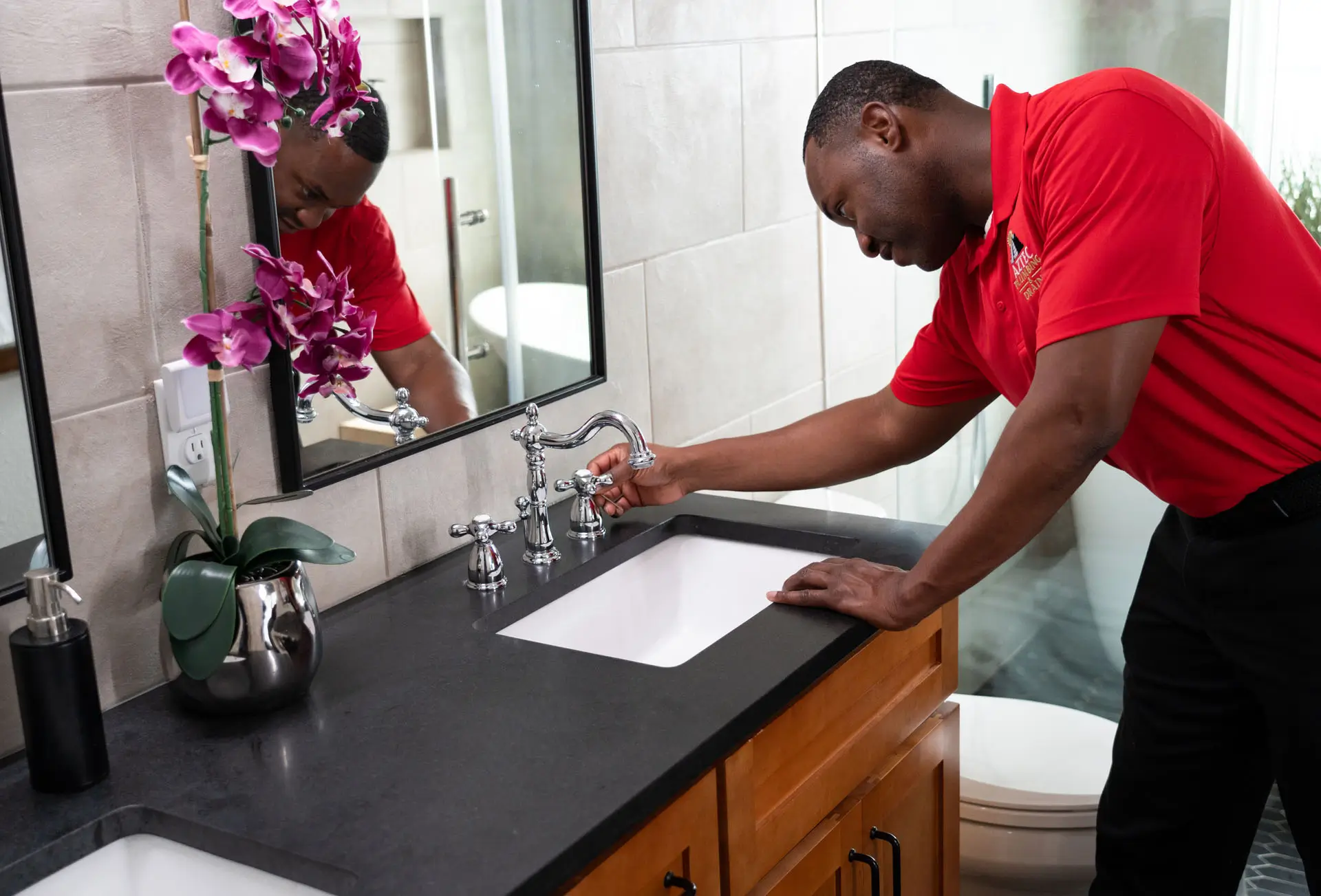
A technician can identify where the leak started and recommend a clear solution. During a visit, we may:
- Examine valves, fittings, and supply lines
- Check the anode rod and tank interior condition
- Look for pinhole leaks or corrosion points
- Test the drain valve and surrounding areas
- Review water heater repair options or replacement choices
Because leaks are often symptoms of broader issues, like heavy sediment buildup, high water pressure, or aging pipes, our assessment ensures we address the root cause, whether that requires a simple repair, a full replacement, or a system upgrade.
Aztec Plumbing & Drains has served Fort Myers and nearby areas for more than thirty years. Homeowners count on our 24/7 emergency plumbing service, straightforward pricing, strong reviews, and financing options when a major repair becomes necessary.
Don’t Risk Water Heater Damage. Call Our 24/7 Water Heater Experts Now
A leaking water heater rarely improves on its own. If you see water around the tank or notice warning signs, acting early protects your home and helps avoid more expensive repairs. Whether your system needs a repair or a full water heater replacement, Aztec is ready to help.
Schedule online or call us at (239) 932-2959 today.