Southwest Florida plumbing systems face conditions that homeowners in many other parts of the country never encounter. Hard water flowing through limestone formations, aging cast iron drain systems, shifting sandy soil, and heavy tropical rainfall all place added stress on your household plumbing. We created this guide to answer the questions homeowners ask most often, providing practical, diagnostic information for homes throughout Lee, Collier, and Charlotte counties.
Contents
Water Bills, Subfloor Leaks, and Emergency Shut-Offs
1. Why is My Water Bill Suddenly So High?
A sudden increase in your water bill usually points to water leaving the plumbing system without being noticed. Hidden toilet leaks, broken underground supply lines, and slab leaks are the most common culprits.
The quickest way to check is the flow indicator on your water meter. If it continues moving after every faucet and appliance has been turned off, water is still flowing somewhere. Seasonal billing tiers can also increase costs once water use reaches higher levels. If you suspect a hidden leak, professional leak detection services can pinpoint the source without unnecessary excavation.
2. How Do I Know if I Have a Slab Leak Under My Concrete Floor?
Warm areas on tile floors, damp baseboards, the sound of running water with every fixture turned off, and unexplained meter movement are all warning signs of a slab leak. Prompt diagnosis limits additional damage beneath the home's foundation.
Buried copper water lines expand and contract as sandy soils shift over time. Those small movements place stress on the piping beneath the slab, eventually leading to leaks that remain hidden until water damage becomes noticeable.
3. Where is the Main Water Shut-Off Valve Located on a Florida House?
Most Florida homes have a main shut-off valve near the front hose bibb, inside the garage, or within the street-side water meter box. Knowing its location allows the water supply to be turned off quickly during a plumbing emergency.
Homeowners should locate the valve before hurricane season or before a plumbing emergency occurs. Turning off the water quickly can prevent severe damage from burst pipes or major leaks while you wait for professional service.
Fort Myers Water Quality and Water Heater Management
4. Is Fort Myers Tap Water Hard or Soft?
Fort Myers has hard water because groundwater passes through natural limestone formations before reaching your home. That process leaves dissolved calcium and magnesium in the water supply, contributing to mineral buildup throughout the plumbing system.
Hard water gradually leaves deposits inside fixtures, appliances, and water heaters. Homeowners concerned about water quality can explore how whole-home water filtration and water softening systems address these specific water conditions.
5. Why Does My Hot Water Smell Like Rotten Eggs?
A rotten egg smell from hot water is commonly caused by hydrogen sulfide gas reacting with the magnesium anode rod inside your water heater. The odor usually becomes stronger in the hot water than in the cold water.
Standard refrigerator filters are not designed to remove dissolved sulfur compounds. Dedicated filtration equipment uses specialized carbon media to eliminate odor-causing contaminants before they reach your household fixtures.
6. How Long Does a Water Heater Actually Last in Florida?
Most traditional storage water heaters in Southwest Florida last between 8 and 12 years. Heavy mineral buildup and constant exposure to hard water frequently shorten their service life compared to many other regions.
Calcium sediment settles inside the tank, reducing efficiency while increasing wear on heating components. Coastal humidity also accelerates exterior corrosion around utility closets and garage installations. If the tank itself has failed, a complete replacement becomes the safest long-term solution.
Kitchen and Bathroom Fixture Troubleshooting
7. Can I Flush "Flushable" Wipes Down My Toilet?
No. "Flushable" wipes do not break apart like toilet paper and can collect inside drain lines, creating stubborn blockages.
Older cast iron drain systems are especially vulnerable because rough interior surfaces catch synthetic fibers as they move through the pipe. Persistent toilet backups should be evaluated before they lead to larger drain problems or require extensive repairs.
8. Why is My Garbage Disposal Humming but Not Spinning?
A humming garbage disposal indicates that the motor has power but the grinding mechanism cannot rotate because it is jammed. This obstruction prevents the impeller from turning even though electricity is reaching the unit.
Food waste, utensils, and other solid objects commonly create this condition. Continued operation without correcting the obstruction can damage internal components and shorten the life of the disposal.
Underground Sewer Lines and Stormwater Drainage
9. When Do Aging Cast Iron Drainpipes Need to be Replaced in Lee County?
Homes built before 1975 frequently contain cast iron drainpipes that have reached the end of their expected service life. Corrosion, recurring backups, and bottom-of-pipe deterioration are common indicators that replacement or trenchless restoration should be evaluated.
As corrosion progresses, wastewater can escape through the bottom of the pipe while roots, insects, and groundwater enter through weakened sections.
This deterioration is also why you might experience sewer backups during heavy Florida summer rains. When heavy rainfall saturates the ground, it places intense pressure on these aging sewer lines. If roots, corrosion, or existing damage have already restricted the pipe, stormwater infiltration forces that wastewater to back up directly into your home.
10. What is the Difference Between Drain Snaking and Hydro Jetting?
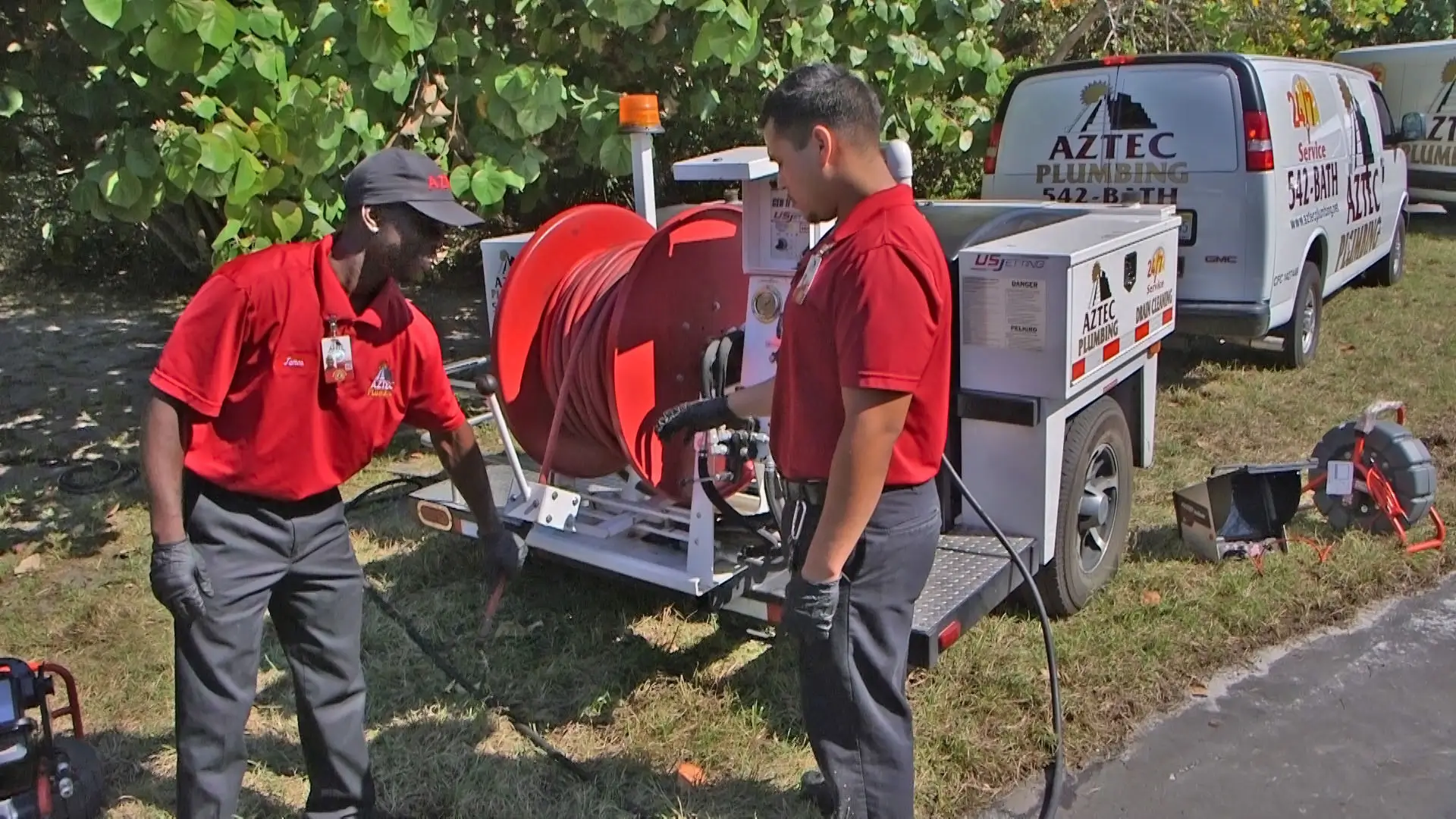
Drain snaking creates an opening through a blockage with a steel auger. Hydro jetting cleans the entire interior surface of the pipe using high-pressure water to remove grease, sludge, and accumulated debris.
Snaking is effective for many isolated clogs, while professional hydro jetting restores the full inside diameter of the pipe by removing buildup along the walls. Before hydro jetting is performed, our technicians use a camera inspection to verify the pipe is structurally suitable for that level of cleaning.
Schedule Your Plumbing Services with Aztec Plumbing & Drains Today
If your plumbing system is showing any of the warning signs discussed above, Aztec Plumbing & Drains can identify the source of the problem and explain the available repair options.
Schedule Online or call today to speak with a member of our team.
Schedule Online(239) 932-2959