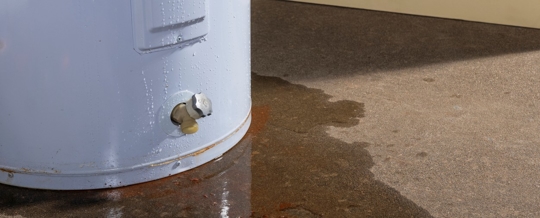
Hard water, which tends to leave behind calcium and magnesium deposits, is a common issue for many homeowners. While these mineral deposits aren’t a danger to your family’s health, they can damage appliances, your water heater in particular.
Here’s What Hard Water Does to Your Water Heater
Decreased water heater efficiency & shorter lifespan: Over time, hard water can reduce a water heater’s efficiency. As sediment builds up on the heating elements, your water will take longer to warm up when showering and laundering. This is more than just an inconvenience. Because your water heater is forced to work harder, it’s more prone to increased wear and tear. You may have to replace your unit much sooner than expected. Remember, an inefficient water heater can also cause your monthly utility bills to rise substantially.
Must flush your water heater more often: To minimize sediment, experts recommend having your water heater flushed at least once a year. However, units that are regularly exposed to hard water need more frequent flushing. In some instances, you’ll need to drain and flush the tank every three months. If you happen to hear a popping or rattling noise, this is a telltale sign an excessive amount of sediment has settled at the bottom of the tank.
How to Overcome Hard Water
Adjust your water heater’s thermostat:High water temperatures can increase the amount of scale buildup in your unit. Lowering your water heater’s thermostat can help. The ideal temperature setting is about 120 degrees.
Invest in a water softener: There are a few different ways to resolve hard water issues. However, the best approach is to invest in a water softener. Most of these systems work by adding sodium ions, which naturally remove calcium and magnesium from hard water. All of your water-using appliances will have an extra level of protection against mineral deposits, including the water heater. You stand to save a lot of extra money in the long run.
Count on the Cape Coral Plumbers for a Quality Repair
Whether you need to repair or replace your water heater or install a water treatment system, the skilled and experienced plumbers at Aztec Plumbing & Drains are prepared to help! We even back our work with a 1-year parts-and-labor warranty. Call (239) 932-2959 or contact us here to schedule your appointment.
Check Out Our Blog Series on Water Heaters
- Water Heater 101
- My Water Heater Running Out of Water Fast
- My Water Heater is Making Noises
- Why Does My Water Heater Smell Like Rotten Eggs
- How Does Hard Water Affect My Water Heater
- How Long Is Normal to Wait for Hot Water?
- Why Won't My Water Heater Drain?
- How to Tell Water Heater Age?
- How to Maintain a Water Heater?
- How Often Should I Flush My Water Heater?
- DIY Water Heater Maintenance
- The Pros and Cons of Tankless Heaters
Water heater making noise that is driving you crazy? We know the feeling. Not only can loud banging or knocking sounds cause you to wake up abruptly during the middle of the night, they can simply disturb the peace and quiet at any time of the day. Luckily, not all of these sounds indicate that you need to repair your water heater. Here are a few common noises your water heater might make and what those sounds often mean:
Popping, Tapping or Knocking Sounds
These are the most common noises a water heater makes and luckily, it’s usually a simple fix. These noises indicate there is a buildup of sediment, or mineral deposits in the tank and it needs to be flushed out. Even if you’re not hearing these noises just yet, we recommend flushing your water heater once a year to prevent a buildup of deposits and avoid more troublesome problems down the road.
A popping sound coming from your water heater is a clear red flag. This noise typically indicates an excessive amount of sediment at the bottom of the tank. It’ll eventually become more difficult for your unit to transfer heat. You should also consider installing a water filtration system (learn about how much a whole-house water filter costs here), which helps remove hard minerals.
Humming or Buzzing
If you have an electric water heater and notice a humming or buzzing sound, it usually means water is flowing around the heating element. When this happens, it can cause vibrations which create the noises you’re hearing. Most of the time, a slight tightening of the element will fix the problem and get rid of the noise.
Screeching
This is usually one of the more alarming sounds your water heater can make and for good reason. Screeching sounds are never good and usually indicate that water flow is restricted or that there’s a serious problem with a part or component.
While it may just be a partially closed inlet control valve that needs to be adjusted, these noises shouldn’t be taken lightly. Opening the inlet control valve is as simple as turning a knob. If the valve seems stuck, debris may have gotten stuck inside. Still, it’s always best to call in a professional right away.
Cape Coral Water Heater Service & Repairs
When you hire Aztec Plumbing & Drains, we will give you honest and professional advice. We'll tell you about the pros and cons of repairing vs. replacing your water heater. If we do recommend a replacement, we will explain all of your options to you fully in simple language. Call us today at (239) 932-2959.
Learn More in Our Water Heater Series:
Take a second to think about what your life would be like without hot water. That’s right — cold showers and baths, cold water for washing dishes and kitchen utensils, cold water for laundry. It would make things far less convenient and a heck of a lot less comfortable, right? Well, it’s time to give some appreciation to your water heater — the one piece of equipment you can thank for having hot water when and where you need it.
What is a Water Heater?
A water heater is a piece of plumbing equipment responsible for a heat transfer process that uses an energy source to heat water above its “normal” temperature. Since we’re not blessed with an adequate amount of hot springs, we typically don’t have access to “natural” hot water in the United States.
For that reason, comes the need for water heaters. These appliances provide us with a continual supply of hot water — so we can use it when and where we need it, whether it’s in the kitchen or in the bathroom.
Water Heater Power Sources
Most water heating appliances require fossil fuels for operation. Natural gas, propane, oil or solid fuels generally act as the fuel source for these appliances, but electricity can be used as well.
Additionally, alternative energy sources such as solar energy, heat pumps and geothermal heating can be used to heat water for daily use in the home.
Types of Water Heaters
- Tank-Type Water Heaters: these are often considered the more “traditional” water heaters. They can be powered by gas or electricity and as the name implies, they come equipped with a large insulated holding tank where hot water is stored until it’s needed. Cold water enters through the bottom of the tank and is heated by a gas flame or electrical elements as hot water is needed for applications throughout the home. These types of water heaters also have an adjustable thermostat that regulates and maintains water temperature.
- Hybrid Water Heaters: these models are similar in look to tank-type water heaters, but they differ in the fact that they have an electric heat pump on top. They operate by capturing heat from the air in the room and then transferring it to the cold water that enters the tank. Generally speaking, hybrid water heaters use about 50-60% less energy than a conventional tank-type water heater, but they do cost nearly twice as much.
- Tankless Water Heaters: these water heaters don’t have a tank at all, as the name implies. They are often mounted on the wall and they can provide hot water for the entire house, without the use of a bulky storage tank. These heaters remain idle until hot water is demanded, and then cold water flows into the unit where it is heated by an electric hanging element. It then flows out of the appliance and toward the faucet or shower head where it’s needed. Since this type of water heater shuts down when hot water isn’t needed, it generally uses about 30% less energy per day than a traditional water heater.
- Point-of-Use Water Heaters: don’t need hot water in the whole house? A point-of-use water heater is the solution for you. They are installed near one specific location where hot water is needed and they heat water at that specific fixture, almost instantly.
Have additional questions about water heater applications and/or the pros and cons of each available model? Don’t hesitate to call on the plumbing experts at Aztec Plumbing & Drains!
Water Heater Repairs, Replacements and Installations in Fort Myers
Do you need your water heater repaired or replaced quickly? Aztec Plumbing & Drains can help! We proudly offer comprehensive water heater services in Fort Myers and throughout the surrounding areas. We offer honest, upfront pricing and free estimates, so you’re never caught off-guard by the cost of your service.
Learn More in Our Water Heater Series:
You hook up the hose, twist the valve, and wait… but nothing comes out. It’s a common problem for homeowners all over Southwest Florida.
There's a good chance the drain valve is clogged or blocked. This usually comes as a result of sediment from inside the tank blocking the valve. Florida’s water has plenty of minerals, and over time they settle at the bottom of the tank until water cannot flow the way it should.
Routine flushing keeps sediment from piling up, but once the valve is clogged you will need to take a few extra steps.
How to Drain a Water Heater
Flushing your water heater once or twice a year is the best way to stay ahead of problems and save on costly repairs. Here’s how to do it:
- Turn off the power or gas
- Shut off the cold-water supply
- Hook up a garden hose
- Open a hot water tap
- Open the drain valve
- Rinse the tank
- Refill and restart
If nothing comes out when you open the valve, it means you have a clog.
How to Unclog a Water Heater Drain Valve
If your water heater will not drain, try these quick fixes before calling in a plumber:
- Open and close the valve a few times. The pressure shift may break the clog.
- Use a stiff wire to gently loosen sediment at the valve opening.
- Turn the cold-water supply back on for a few seconds to flush debris with extra pressure.
- Repeat as needed. Sometimes it takes a couple of tries.
If water still will not flow, or if you are not comfortable attempting this, call Aztec Plumbing & Drains at (239) 932-2959. We clear clogged valves safely and know how to get tanks draining again.
Common Causes of a Clogged Water Heater Drain
Sediment is usually the main culprit, but it is not the only reason your water heater might not drain. Other causes include:
- Mineral buildup: Hard water leaves deposits that settle in the bottom of the tank.
- Rust or corrosion: Older tanks shed flakes that block the valve.
- Faulty valve: Sometimes the valve itself is worn or damaged.
- Skipped maintenance: Going years without a flush allows hardened buildup.
- High hot water use: Larger households put more demand on the system.
When to Call a Professional for Water Heater Repair
DIY steps can help with minor clogs, but sometimes it is better to let a pro step in. If your tank still will not drain, or you are seeing leaks, hearing loud banging, or running out of hot water too fast, it is time to call.
Aztec Plumbing & Drains offers water heater repair and maintenance across Fort Myers, Cape Coral, Naples, and Port Charlotte. With free estimates and no trip fee, getting help is simple. Our technicians will clear the clog, inspect the system, and help keep it running longer.
Keep Your Water Heater Running Smoothly
Regular flushing helps prevent clogs and extends the life of the system, saving on costly repairs or replacements, and when you need expert help, Aztec Plumbing & Drains is here for homeowners in Southwest Florida. Call us today at (239) 932-2959 for reliable service and keep your hot water running.
Learn More in Our Water Heater Series:
Need-to-Know Water Heater Maintenance Tips
Imagine a life without hot water. That’s right, think about taking a shower or bath, cleaning dishes and doing laundry. We all take hot water for granted at times, but life just wouldn’t be as convenient or as comfortable without it.
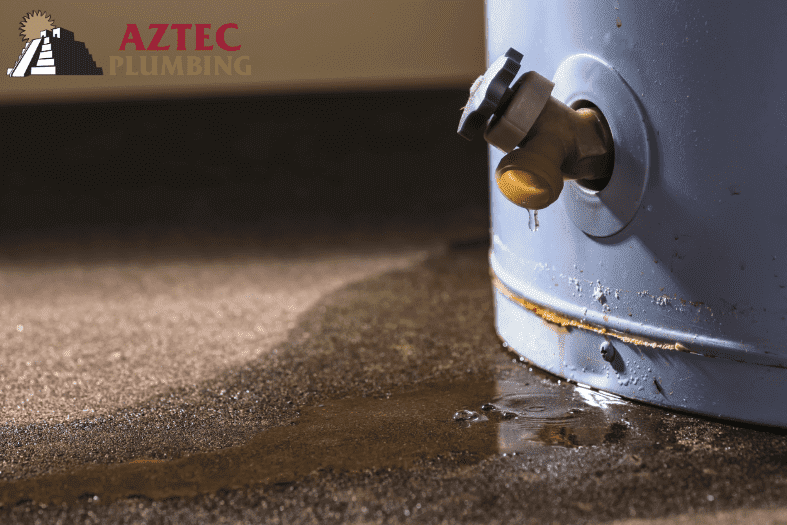
Now take a moment to think about the last time you performed maintenance on your water heater, or had a professional come in to do so. Can’t remember? Well, you’re not alone. It’s among the most commonly neglected pieces of equipment in your home, but we’re going to guess you’ll really start thinking about it if and when it breaks down.
So, what does water heater maintenance involve? Find out below!
Maintenance Task #1 - Efficiency
First off, there are a few things you can do to make sure your water heater is operating as efficiently as possible. These tasks include adjusting the thermostat to 120°F or lower, keeping the space around the appliance clear and draining sediment and debris from the tank regularly.
When it comes to the temperature setting — there’s really no need to ever have it set above 120°F. In fact, doing so can cause scalding and severe injuries. It will also cause your energy bills to rise without providing you with much in terms of added functionality.
As far as keeping the space around the appliance clear — most models require at least two feet. This allows for proper airflow and exhaust and any items located within a 2-foot radius could hinder its performance.
As water flows through the tank, it drops off sediment and debris that build up over time. In order to get rid of it and keep the system functioning at peak performance, you’ll want to drain the tank a few times per year. All you need to do is attach a hose to the drain valve and run it into a bucket until the water is clear.
Maintenance Task #2 - Functionality
If your water heater doesn’t seem to be working properly, or you simply want to make sure it continues to operate correctly, these are the maintenance tasks you’ll want to tackle.
Make sure the tank is completely full of water before turning the power on to the system.
If you don’t allow the tank to fill with water first, it could cause the upper heating element to burn out which means you’ll have no hot water until it is replaced. Another common problem arises when there is not enough voltage being sent to keep the system running. Check the manufacturer’s instructions for power requirements.
Test the temperature-pressure relief valve by shutting off the power to the unit as well as the cold water inlet. Then put a bucket in place to catch water from the valve. Pull the trip lever and you should see a rush of water vapor and air exit through the valve. If you don’t, you’ll need to drain the tank and replace the valve as it is no longer functioning properly.
Check the anode rod to make sure it still has some life left. You should have the rod replaced if more than six inches of the core steel wire is exposed, the rod is less than ½” thick, or if it’s coated with calcium.
Sure, maintaining your water heater can sound like a lot of work, but there’s no need to stress. That’s what we’re here for! While there are some tasks you can tackle on your own in a few short minutes, other tasks are best left to the pros.
At Aztec Plumbing & Drains, we provide honest, professional advice backed by years of experience. When you’re dealing with a broken water heater, we’ll give you the objective pros and cons of repairing vs. replacing the water heater. If the water heater needs replacing, we’ll explain your options in simple, clear language. Give us a call today at (239) 932-2959.
Learn More in Our Water Heater Series:
Don’t consider yourself too handy? That’s quite alright — you’ve got plenty of other things to worry about. But we’ll bet you do like saving a few bucks whenever possible, right? Well, when it comes to your water heater, you’ll be happy to know you can take care of a few simple water heater maintenance tasks relatively quickly and without having much prior knowledge at all. See below to find out what you can do on your own, before you call in the experts:
Setting The Water Heater Thermostat
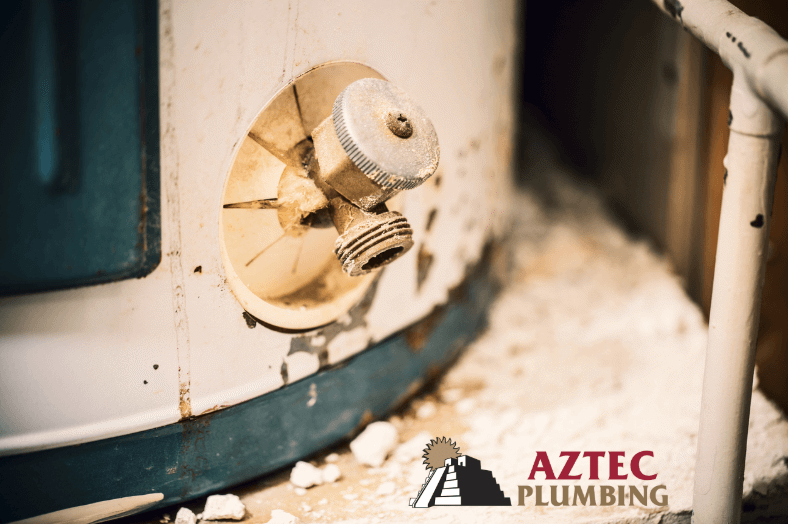
If you can set a clock and you can set the temperature on any of the thermostats in your home, chances are, you’ll be able to set the thermostat on your water heater, too! All you need to do is turn the dial to the recommended setting (usually 120°F) or below if you want to save a few extra dollars on your utility bill each month. *You may need to use a screwdriver to remove the cover on the temperature dial on certain models.*
Insulating The Pipes
All you need for this project is some self-sticking foam pipe insulation and a scissor. Simply measure the length of the hot and cold water pipes and then cut a piece of foam to wrap around them. Insulating the hot pipe can help keep energy bills low, while insulating the cold pipe can help prevent condensation during the warmer months of the year.
Insulating The Tank
Why insulate your water heater tank? Doing so can help keep the tank warm for a longer period of time which will in turn, prevent the water inside the tank from cooling off as quickly. This will prevent your system from kicking on as frequently as it might if the tank were not insulated, which can ultimately help you save on energy bills.
All you need to do is cut a piece of insulating blanket to fit around the tank, and around the pipes, and then seal it with foil tape. Just remember that you never want to cover the tops of oil or gas heaters as this can cause some major issues. You can however, cover the top of your electric water heater with a piece of circular insulation and tape it down to the sides of the tank.
Give Aztec Plumbing & Drains a call at (239) 932-2959 today to learn more about our water heater services in your area!
Learn More in Our Water Heater Series:
How Much Hot Water Does a Shower Use?
A 40-gallon water heater can provide up to 2 showers in an hour (if you’re not using any other water appliances).
In this article, we’ll explain…
- How to “size” a water heater, so you know how much hot water you need at one time
- Why your water heater is running out of hot water too fast
- Let’s start with sizing a water heater…
Finding out how much hot water you need at one time
We told you a 40-gallon water heater can provide up to 2 showers in an hour. But really, that all depends on two factors:
- How long your showers are
- What other water-demanding appliances are running at the same time
We’ll run through some numbers to help you see if you can squeeze two full showers out of a 40-gallon water heater.
Below is a list of common hot water-consuming activities with their corresponding water usage in gallons:
- Clothes washer - 25 gallons per use
- Shower - 10 gallons per use
- Dishwasher - 6 gallons per use
- Kitchen & bathroom faucet flow - 2 gallons per minute
If you limit your hot water activities to ONLY showers, a 40-gallon water heater could comfortably handle 2 average-length showers at the same time (17 + 17 = 34 gallons). Now, let’s say you shower in the morning and you do ALL of the above activities in the same hour (we’ll also assume you take an average-length shower). You’d use 41+ gallons of hot water, and if that’s the case, a 40-gallon water heater might not be enough for your needs.
But if more people in your home take showers within the same hour, or you take longer showers, then you may run out of hot water fast. Try limiting how many appliances you run at once and taking shorter showers if you find that you’re running out of hot water really fast.
Let’s look at some other reasons why you may be getting cold water…
Have a 40-gallon water heater that’s running out of hot water too fast?
First, ask yourself how long you’ve had the problem: Have you ALWAYS struggled to get hot water? Or is it recent?
We’ll explain what the issue could be in both scenarios.
Has your water heater ALWAYS run out of hot water too fast?
If you’ve tried to limit your hot water usage but your 40-gallon water heater just isn’t cutting it, it could be that your water heater is too small for your needs.
Below are some figures that provide a rough estimate of what size water heater you’ll need based on family size:
- 2 people or fewer = 23–36 gallons needed
- 2–4 people = 36–46 gallons needed
- 3–5 people = 46–56 gallons needed
- 5 people or more = 56+ gallons needed
Solution: Contact a plumber to install a bigger water heater that matches your needs. They’ll provide you with recommendations on different models, including tankless models, and sizes based on your needs.
Has your water heater RECENTLY run out of hot water too fast?
Then you could have 1 of these 3 problems…
Reason #1: Sediment buildup at the bottom of the tank
The water we bring into our homes to heat carries sediment (tiny mineral particles), which can build up on the bottom of your water heater’s tank.
This sediment buildup reduces the amount of hot water your water heater can provide because sediment takes up space that should be used to store hot water.
Solution: Hire a professional to flush your water heater. This will eliminate the sediment buildup.
Reason #2: Thermostat problems
Your water heater has a small thermostat that controls the temperature of the heated water. Sometimes these breakdown or malfunction over time, which limits your water heater’s ability to heat the water.
Solution: Have a plumber inspect your water heater’s thermostat to make sure it’s functioning properly.
Reason #3: Water heater is too old
Older water heaters lose their ability to heat water well over time.
Think of an old water heater like an old car. Generally, older cars require more repairs and maintenance, and often they don’t perform as well as newer cars with less mileage. It’s similar with older water heaters. They just don’t heat water as efficiently or thoroughly as they used to.
Solution: If your water heater is too old (10+ years), it may be time to replace it. Contact a plumber for price estimates on a new water heater.
Need help with your water heater in Southwest Florida? Contact Aztec Plumbing & Drains to schedule an appointment with one of our trusted plumbers. We’ll fix your hot water problems fast—the first time.
Learn More in Our Water Heater Series:
Are you running out of hot water quicker than you used to?
That’s usually caused by a bad dip tube. But, if you have an electric water heater, the culprit could also be broken heating elements or a faulty thermostat.
Confused about what those are? Don’t worry—we’ll go into more detail about each of these 3 problems and how you can fix your water heater.
Let’s start with the most common issue, a bad dip tube…
Need a plumber to fix this issue? Just give us a call and we’ll get your hot water running normal again.
The most likely problem: A bad dip tube
What’s a dip tube?
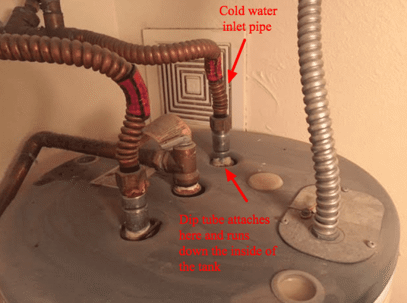
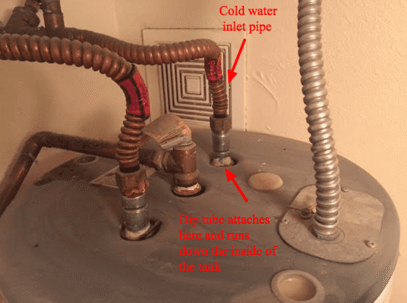
A dip tube is a long tube that attaches to the cold water inlet of the water heater (pictured above), and stops about 8 inches above the bottom of the tank. A typical dip tube looks like this.
The purpose of the dip tube is to push incoming cold water to the bottom of the tank, where the water is then heated by a gas burner or electric heating elements (depending on what type of water heater you have).
But, if your dip tube goes bad, the incoming cold water will mix with the heated water near the top, which means you’ll feel colder water a lot faster than normal.
2 reasons your dip tube goes bad
1. Normal wear and tear
The dip tubes in most newer water heaters should last the lifespan of the unit (8–12 years). However, some dip tubes also function as a “sacrificial anode rod”, which means it’s designed to attract all the corrosive elements in the water, ultimately protecting the tank from corrosion. Because these dip tubes “sacrifice” themselves, they usually have a shorter lifespan than the unit itself and will need to be replaced.
2. It’s defective
Some dip tubes are more prone to disintegrate and break down than others. Most water heaters made between 1993–1997 have defective dip tubes because during those years, many manufacturers bought and installed tubes with lower quality polypropylene plastic.
You’ll need a new dip tube if you notice these 2 signs:
1. Your water heater was manufactured between 1993–1997. You’ll know if you see the any numbers between 93 and 97 in the 4th and 5th digit of your water heater’s serial number.
2. Small white plastic particles are suddenly clogging your faucets. These little pieces of plastic come from a disintegrating dip tube.
How can I replace a bad dip tube?
Replacing a bad dip tube isn’t complicated, but you’ll still need a professional’s help. You’ll need a plumber to flush your water heater to get rid of any disintegrated plastic particles that may be floating in your tank.
Dip tube not the problem? If you have an electric water heater, check for these problems…
Bad heating elements
Electric water heaters have 2 heating elements (upper and lower) to heat water in your tank. Since the coldest water is on the bottom of your tank, the lower heating element does most of the work.
So if you’re getting cold water really fast, a bad lower heating element could be to blame. Contact a plumber to test your heating elements for continuity (to see if current flows). If your heating element is broken, they’ll replace it.
Faulty thermostat
An electric water heater has 2 thermostats that control each of the heating elements. As with all electrical components, sometimes these malfunction or break down with time. If one of the thermostats is broken, then it will limit your home’s hot water supply.
Contact a professional to inspect your thermostats to make sure they’re running correctly.
Need water heater help from a Florida plumber?
Contact Aztec Plumbing & Drains to schedule a water heater repair. We’ll send one of our certified plumbers to check out the source of the problem and then repair it so you can have normal hot water again.
Learn More in Our Water Heater Series:
“Eww, what’s that smell?”
Are you smelling a strong “rotten eggs” or sewer gas smell coming from your water heater, especially when you run hot water?
That “rotten egg” smell is caused by hydrogen sulfide (H2S), which is a colorless, flammable and highly hazardous gas.
Hydrogen sulfide doesn’t dissolve in water, so when you turn on the hot water tap, the heat makes the hydrogen sulfide escape into the air, hence the unpleasant odor.
Small amounts of hydrogen sulfide in your water don’t cause any problems, but according to University of Georgia Extension (UGA), when H2S exceeds 1.0 ppm (parts per million) in your water, it can ruin your pipework and affect the taste of your drinks and cooked food—so it’s something you want to get rid of ASAP.
In this article, we’ll discuss 2 major points:
- How hydrogen sulfide entered your water in the first place
- What you can do to eliminate H2S
Let’s start with how hydrogen sulfide got into your water…
How hydrogen sulfide entered your water in the first place
There are 2 main ways how hydrogen sulfide can enter your water…
Cause #1: Sulphur-reducing bacteria
Here’s the condensed version (so we don’t turn this into a science class): Sulphur-reducing bacteria (SRB) use sulfur as an energy source, and are common in oxygen-deficient environments such as deep wells, plumbing systems and water heaters.
You can think of SRB as magicians who turn sulfates into hydrogen sulfide. More scientifically, when SRB come into contact with sulfates, they reduce them to hydrogen sulfide—hence their name.
If your home has a high count of this kind of bacteria then that could be what’s causing that foul, smelly odor.
Cause #2: A corroded magnesium anode rod in water heater
Your water heater comes with an anode rod, which is supposed to protect your water heater tank from rust. The rod essentially draws rust to it in place of your tank.
Many water heaters have an anode rod made out of magnesium. Magnesium anode rods supply electrons that aid in the conversion of sulfate to hydrogen sulfide gas—just like the sulphur-reducing bacteria can.
WARNING: If you’re using an ion exchange water softener, it’s making the problem worse. That’s because softened water increases the rate at which the magnesium rod corrodes, creating more hydrogen sulfide.
3 ways to get rid of hydrogen sulfide in your water
Below are 3 ways to reduce hydrogen sulfide in your water to get rid of that bad smell…
Solution #1: Shock chlorination
Shock chlorination is used to disinfect tanks, wells and/or water distribution systems. This cleansing process kills the cluster of sulphur-reducing bacteria (those magic bacteria that create H2S), thereby eliminating the bad smell.
Learn more about shock chlorination procedures.
Solution #2: Proper water filtration
The type of filter you need depends on the level of hydrogen sulfide. For more information about different types filters, contact a plumber. They’ll be able to provide filter recommendations.
Solution #3: Replace the water heater anode rod
If your rod looks corroded and nasty (like the image in Cause #2), it’s time to replace it. If you had a magnesium rod, you’ll want to find one made of aluminum or zinc.
Watch is DIY video on how to replace a dirty anode rod, or contact a plumbing professional for help.
Need some help from a professional Florida plumber?
Contact Aztec Plumbing & Drains to schedule a water heater repair today. We’ll send one of our trustworthy technicians to your home to get rid of that stinky smell once and for all.
Learn More in Our Water Heater Series: